
The Ancient Japanese Onsen:
Nature’s First Wellness Spa
What Is an Onsen?
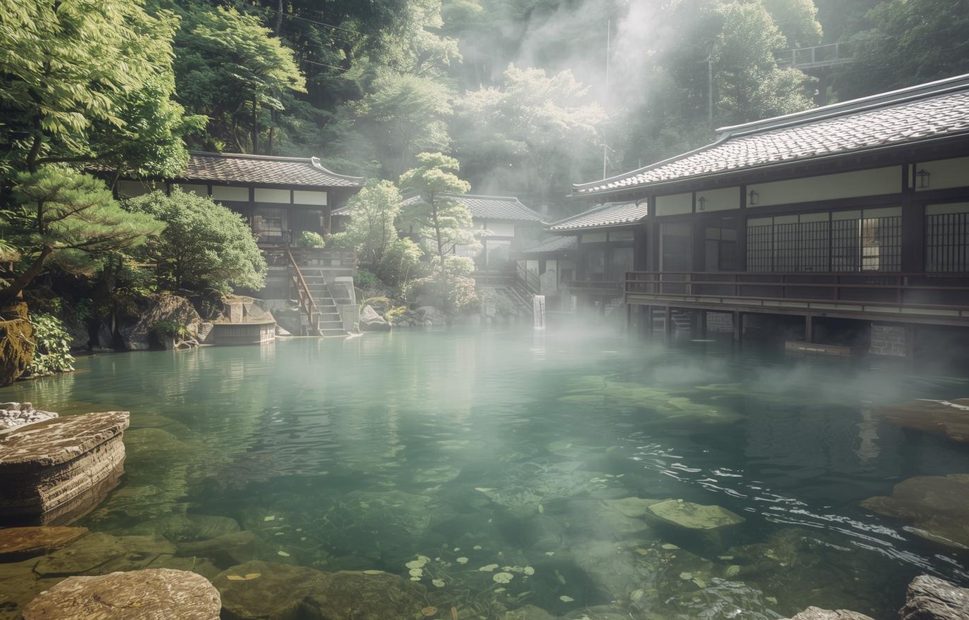
Steam rising, volcanic minerals shimmering, mountains holding silence, this is the onsen. For centuries, the Japanese have gathered in these natural hot springs, not only to bathe, but also to heal, reconnect, and renew.
More than just water, onsen is a practice, a pause, a way of returning to oneself. The minerals soothe muscles, the heat helps lower stress, and the ritual restores balance between the body and mind. Japan’s longevity is among the highest in the world and is in no small part a testament to these timeless rhythms.
A Short History You’ll Want to Know
- Ancient Origins: Records from the 8th century describe samurai recovering in onsens, and farmers soaking after labor in the fields.
- Community Bond: Bathing together was about connection, shared quiet, and a sense of belonging.
- Ritual Order: Even today, there is reverence in washing before entering, moving slowly, speaking softly, and showing respect for the water
The Science of Healing
Modern research confirms what Japan has long practiced:
- Muscles & Joints: Warm water helps relieve pain, reduce stiffness, and improve circulation.
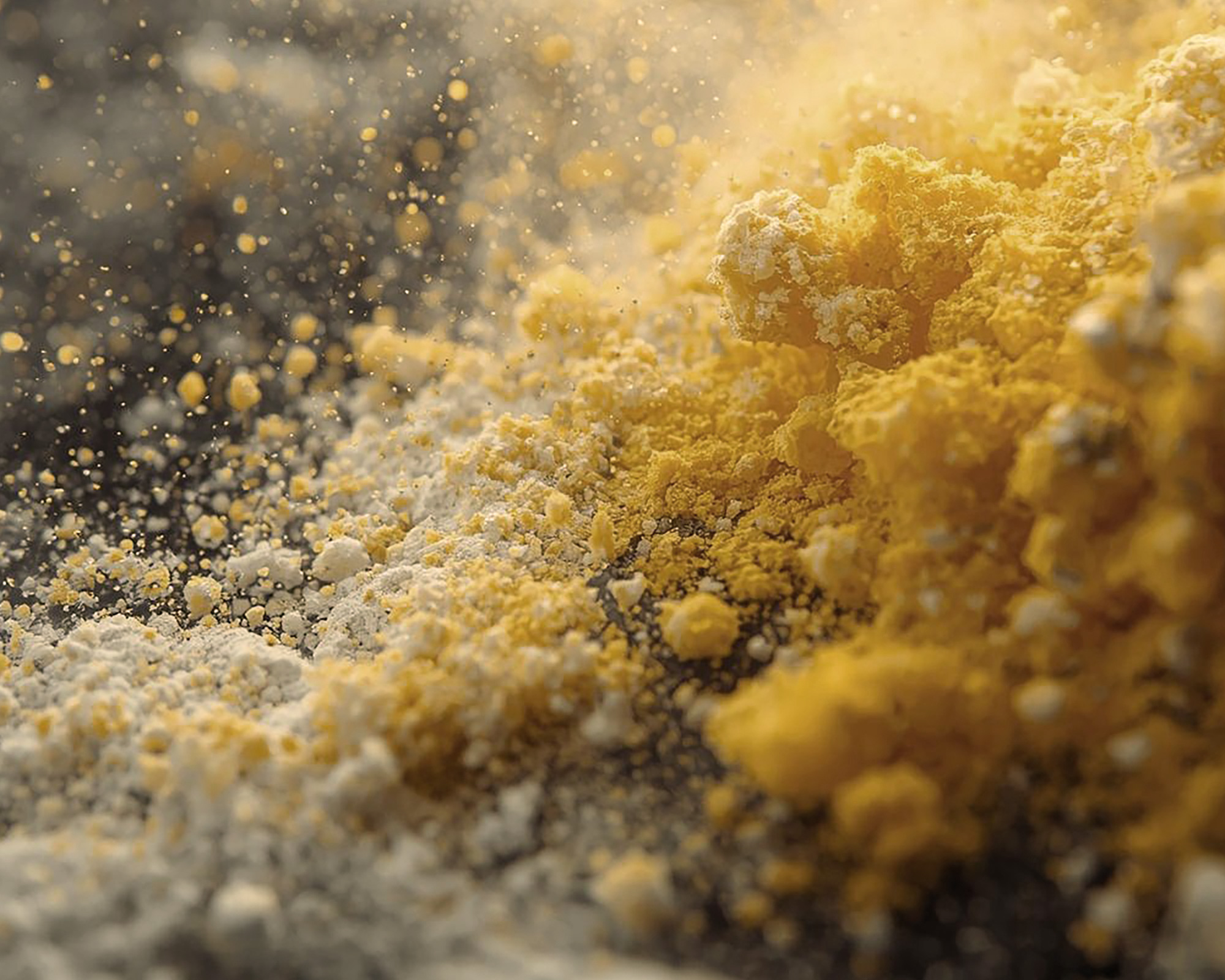
- Skin: Minerals like sulfur and silica soften and calm inflammation.
- Heart & Vessels: Daily bathing lowers blood pressure and supports cardiovascular function.
- Stress: Immersion activates the parasympathetic nervous system, reducing cortisol levels.
- Sleep: The post-bath cool-down signals the body to rest more deeply.
A 2020 study in Heart (BMJ) following over 30,000 Japanese adults for 20 years found that people who bathed daily had a 28% lower risk of cardiovascular disease and a 26% lower risk of stroke compared to those who bathed less than twice a week.
My Story
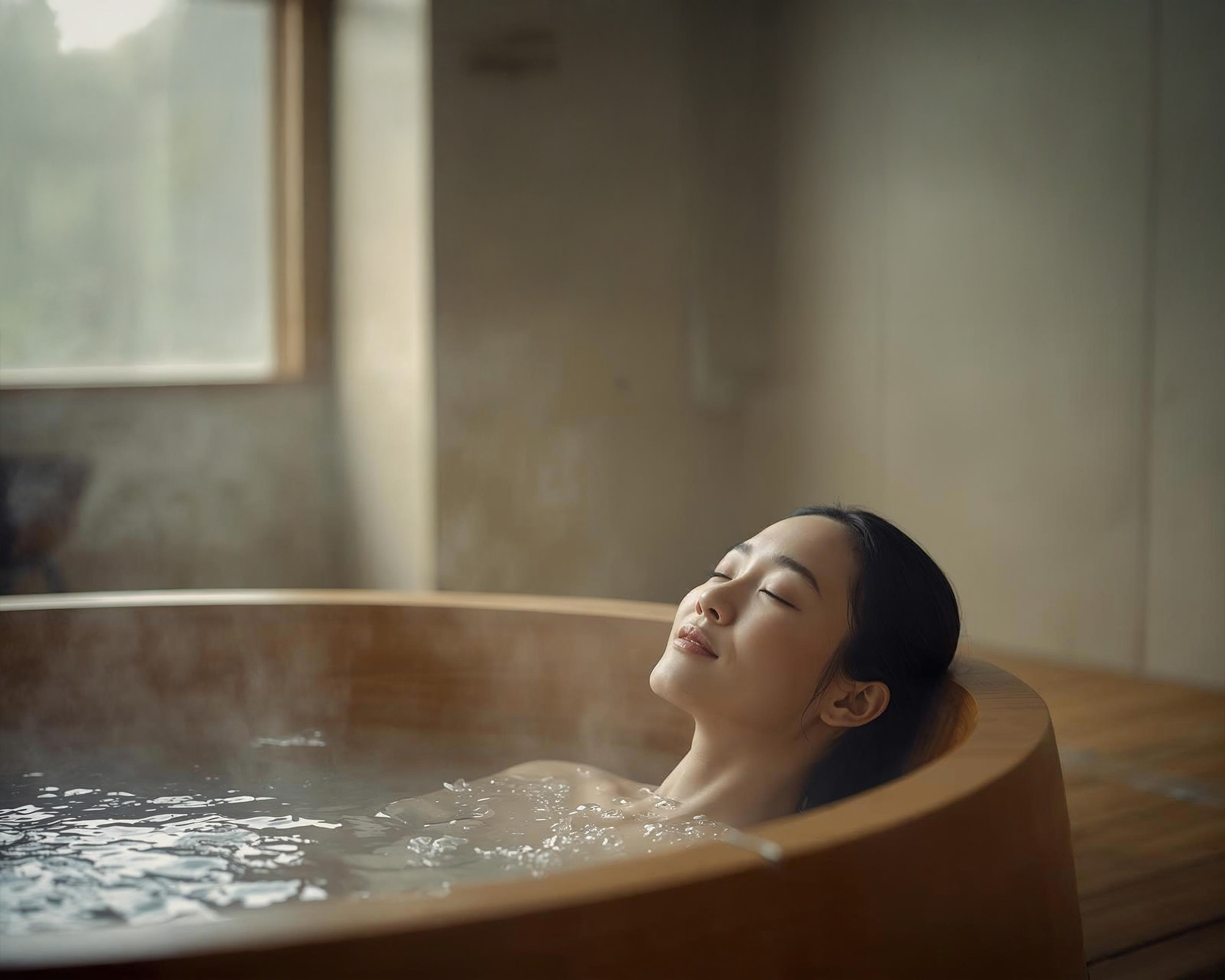
I married into an American-Japanese family whose traditions introduced me to the Japanese way of life. My father-in-law built an ofuro by hand, a wooden soaking tub, and when we soak, it feels like soul renewal. Each year, when I return to Japan, I fall back into this rhythm: bathing at night, letting the water wash away the day’s heaviness, freeing my mind, and preparing for tomorrow.
Back in America, I looked around me: friends, colleagues, strangers on the subway, burdened by stress, anxiety, illness. I realized these Japanese practices, proven for centuries, remain rare here. Yet Japan’s longevity is not a matter of luck. It’s a ritual. It’s intentional living. I felt called to bring this forward.
From Onsen to somaé
Bathe with intention and care.
Japan has long preserved the purity of onsen through yunohana—powdered mineral blends, carefully crafted in small batches. Inspired by this reverence, somaé was born: a way to bring Japanese bathing rituals into modern, everyday life.
Your somaé Ritual
- Prepare the space – dim lights, silence your phone, set towel + robe.
- Set the water – 100–104°F (38–40°C).
- Add somaé minerals – dissolve and swirl.
- Breathe deeply – inhale, exhale, pause.
- Soak mindfully – 15–20 minutes is enough.
- Optionally play soft music—we’re curating a somaé playlist.
Track your feelings. Journal them. If you use a wearable device, notice how your nervous system shifts. Healing is visible.
The Core Ritual: somaé Mineral Soak
At the heart of somaé is a modern mineral soak, inspired by Japan’s most enduring wellness practice.
- Japanese volcanic minerals: remineralize + detoxify
- Magnesium: deep muscle release + nervous system regulation
- Bioenergetic botanicals: ground, uplift, beautify
- Aromatics: soothe senses, clear mental clutter
It’s a nervous system reset. A ritual for reclaiming calm, for returning to parasympathetic balance where true healing begins.
The somaé Way
- Live slowly.
- Live with intention.
- Breathe deeply.
- Create beauty within and around you.
- Reconnect with natural rhythms.
- Heal through the senses.
Discover the Japanese water mineral wellness practice, an invitation to embrace timeless serenity. Soon, accessible just for you.
With heart,
somaé